

Kod produktu: 22417271
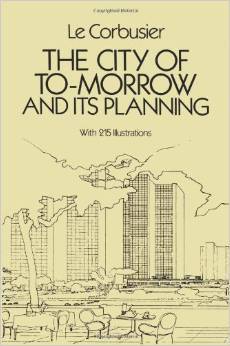
Le Corbusier, The City of Tomorrow and Its Planning
Wydawnictwo: Dover Publications Inc Rok wydania: 2000 Liczba stron: 301 Okładka: miękka Stan: nowa
Program lojalnościowy
Zdobywaj punkty za zakup produktów objętych programem lojalnościowym. Za punkty będą naliczane rabaty na kolejne zakupy.
W panelu klienta znajdziesz informacje o Twoim stałym rabacie.
Zdobywaj punkty za zakup produktów objętych programem lojalnościowym. Otrzymuj produkty lub rabaty na kolejne zakupy.
Załóż konto lub zaloguj się. W panelu klienta znajdziesz informacje o zebranych punktach.
Zapytaj o produkt

Administratorem danych osobowych jest CZAS KSIĄŻKI. Przetwarzamy je w celu przesłania odpowiedzi na zapytanie. Więcej informacji dotyczących przetwarzania danych osobowych znajduje się w polityce prywatności.
Udostępnianie karty produktu



Paczkomaty InPost
Koszty dostawy wybranego produktu
-
Paczkomaty 12,99 zł
Paczkomaty InPost
-
Przesyłka kurierska do 30 kg 19,00 zł
-
Przesyłka ekonomiczna polecona -Poczta Polska 14,90 zł
-
Przesyłka priorytetowa polecona -Poczta Polska 15,90 zł
Cena dostawy dotyczy tego produktu (w wybranym wariancie - jeśli dotyczy). Może się ona zmienić po dodaniu innych produktów do koszyka.
Opis produktu
Książka w języku angielskim.
Wysyłka w ciągu 6-9 dni roboczych.
This is a translation of the eighth edition of "Urbanisme, " a landmark work in the development of modern city planning. It was so recognized when it first appeared in English in 1929. A review in the "Nation" stated that "Le Corbusier ranks with Freud, Picasso, and Einstein as a leading genius of our time. The only great architect alive, he has turned his attention from the individual house to town-planning. And the result is 'The City of To-morrow, ' a book not for aesthetics but for statesmen."At the same time, Edgar Johnson wrote in the "New York Evening Post" that "M. Le Corbusier's extremely important book is an analysis of the problem of the city and a solution. It sidesteps none of the issues, admits the inevitable growth in population, the need for speed and centralization, and provides a reasoned and thorough overcoming of the difficulties. This book is, both practically and artistically, a work of vision."The book was one of the first to recognize an approaching "urban crisis," and its main thesis is that such a vast and complicated machine as the modern great city can only be made to function adequately on the basis of strict order, that we must aim first of all at efficiency but that it must lead us on to a fine and noble architecture. Le Corbusier raises questions in this work that are still being raised today. He concludes from his study that the whole urban scene is one of wasted opportunities and inefficiency. He proposes an alternative course, which is a bold and drastic reconstruction of the entire machine.Le Corbusier presents in this work two schemes for the reconstruction of a modern city. One is the "Voisin" plan for the center of Paris and the other is his more developed plans for the "City of Three Million Inhabitants." In both these schemes he adopts the skyscraper as his most important unit, but they are set at immense distances from one another and are surrounded by large open spaces or parks. They are allocated to commercial, not residential purposes; the great tenement houses and other buildings will remain relatively low in height. The plans included in this book demonstrate clearly the scope and general appearance of such a reconstruction as Corbusier proposes of a great modern city.


 Zaloguj przez Google
