

Kod produktu: 20654427
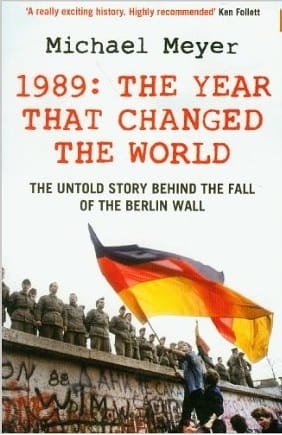
Michael Meyer, The Year That Changed the World: The Untold Story Behind the Fall of the Berlin Wall
Wydawnictwo: Pocket Books Rok wydania: 2010 Liczba stron: 272 Okładka: miękka Stan: nowa
Program lojalnościowy
Zdobywaj punkty za zakup produktów objętych programem lojalnościowym. Za punkty będą naliczane rabaty na kolejne zakupy.
W panelu klienta znajdziesz informacje o Twoim stałym rabacie.
Zdobywaj punkty za zakup produktów objętych programem lojalnościowym. Otrzymuj produkty lub rabaty na kolejne zakupy.
Załóż konto lub zaloguj się. W panelu klienta znajdziesz informacje o zebranych punktach.
Zapytaj o produkt

Administratorem danych osobowych jest CZAS KSIĄŻKI. Przetwarzamy je w celu przesłania odpowiedzi na zapytanie. Więcej informacji dotyczących przetwarzania danych osobowych znajduje się w polityce prywatności.
Udostępnianie karty produktu



Paczkomaty InPost
Koszty dostawy wybranego produktu
-
Paczkomaty 12,99 zł
Paczkomaty InPost
-
Przesyłka kurierska do 30 kg 19,00 zł
-
Przesyłka ekonomiczna polecona -Poczta Polska 14,90 zł
-
Przesyłka priorytetowa polecona -Poczta Polska 15,90 zł
Cena dostawy dotyczy tego produktu (w wybranym wariancie - jeśli dotyczy). Może się ona zmienić po dodaniu innych produktów do koszyka.
Opis produktu
Książka w języku angielskim.
Wysyłka w ciągu 6-9 dni roboczych.
'Mr Gorbachev, tear down this wall!' This declamation by president Ronald Reagan when visiting Berlin in 1987 is widely cited as the clarion call that brought the Cold War to an end. The West had won, so this version of events goes, because the West had stood firm. American and Western European resoluteness had brought an evil empire to its knees. Michael Meyer, in this extraordinarily compelling account of the revolutions that roiled Eastern Europe in 1989, begs to differ. Drawing together breathtakingly vivid, on-the-ground accounts of the rise of Solidarity in Poland, the stealth opening of the Hungarian border, the Velvet Revolution in Prague, and the collapse of the infamous wall in Berlin, Meyer shows that western intransigence was only one of the many factors that provoked such world-shaking change. More important, Meyer contends, were the stands taken by individuals in the thick of the struggle, leaders such as poet and playwright Vaclav Havel in Prague; Lech Walesa; the quiet and determined reform prime minister in Budapest, Miklos Nemeth; and the man who realized his empire was already lost and decided, with courage and intelligence, to let it go in peace, Soviet president Mikhail Gorbachev. Michael Meyer captures these heady days in all their rich drama and unpredictability, providing a thrilling chronicle of perhaps the most important year of the 20th century.


 Zaloguj przez Google
